
You can buy a house in winter in Northwest Indiana. Plan for what the cold hides. Snow can cover the roof, and an inspector may not run the air conditioning in the cold. A vacant house may have its water shut off. Indiana law says the inspection report has to list what wasn’t checked and why. Holidays also stretch the three business days your lender needs to get you the Closing Disclosure before you close.
Looking at homes this winter? Call Sash at (219) 808-1520.
It’s a Saturday morning in Valparaiso after an overnight snow. Two buyers stand in the front hall of an older house, boots on a towel by the door.
The furnace kicks on while they look up at the ceiling. He takes his phone light down to the basement to find the sump pit. She looks out the back window at a yard that is all white.
They like the house. They just can’t see half of it. Here’s how we help buyers see what they can and get the rest on paper.
Can you get a home inspection in winter?
The rule that matters is in Indiana Code 25-20.2-2-7. It says the report has to list any system or part the state standards cover that was present but not inspected, and the reason it wasn’t. If snow covered the roof or the water was off, the report should say so.
Read that part first. Then talk with your agent about your inspection contingency before the deadline passes.
What snow and cold can hide
The Indiana inspection standards, 878 IAC 1-2-1, tell inspectors to check the roof covering, the roof drainage, the flashing, and the chimneys. They also say the inspector must report the methods used to inspect the roof. With snow on it, the report may say it was looked at from the ground.
Air conditioning is the other gap. The International Association of Certified Home Inspectors (InterNACHI) Standards of Practice say its inspectors are not required to run cooling equipment when it is below 65 degrees Fahrenheit outside.
Snow and frozen ground also cover grading and drainage. Look at the basement walls and floor for old water lines.
What a winter home inspection can and can’t check
| Item | In winter | What the standard says | What to ask for |
|---|---|---|---|
| Roof covering | Snow can hide shingles and flashing | Indiana rule says the report must state how the roof was inspected | Ask for the roof’s age and receipts, look again at the walkthrough |
| Central air | May not be run in the cold | InterNACHI says inspectors don’t have to run it below 65 degrees Fahrenheit outside | Ask for service records or a spring check in writing |
| Furnace | Running every day, easy to hear and see | Indiana’s rule says to inspect installed heating equipment and vents | Ask when it was last serviced |
| Water in a vacant, winterized house | Water may be shut off | Indiana’s rule says inspectors don’t need to operate a system that is shut down | Ask the listing side to turn the water on before the inspection |
| Sump pump | Checked inside the house | Indiana’s rule says to inspect drainage sumps and sump pumps | Walk outside and find where the discharge line ends |
| Grading and drainage | Snow and frozen ground cover the yard | Indiana’s rule says to inspect grading likely to affect the house | Look at basement walls and floors for old water marks |
Based on Indiana rules and the InterNACHI Standards of Practice. Checked November 2, 2026.
What winter shows you better
The furnace is working every day, so you can hear it and feel it. Walk every room and find the cold ones. Look for frost on the inside of windows. If one spot on the roof melts faster than the rest, ask about it.
Find where the sump pump’s discharge line comes out. A frozen or buried line is worth a question.
Ask the seller for a year of gas and electric bills to see what heat costs there.
Winter works for a radon test too, since the windows stay shut.
Vacant and winterized homes
Some vacant houses get winterized. The water is shut off and the lines are drained so pipes don’t burst.
For a buyer, it means the plumbing can’t be tested as the house sits. The Indiana standards say inspectors don’t have to operate a system that is shut down. Ask the listing side, in writing, to have the water turned on before the inspection.
Closing around the holidays
Your lender has to give you the Closing Disclosure at least three business days before closing, says the Consumer Financial Protection Bureau (CFPB). That form shows your final loan terms and costs.
For that three-day wait, Regulation Z counts every day except Sundays and federal holidays. Saturdays count. The holidays this season are Veterans Day on November 11, Thanksgiving on November 26, Christmas on December 25, and New Year’s Day on January 1, 2027, per the Office of Personnel Management (OPM).
The same rule covers delivery. If the form comes by mail or email, it counts as received three business days after it was sent, unless you confirm you got it sooner. Answer the lender’s email the day it arrives.
Closing Disclosure deadlines around the holidays
| If you close on | Closing Disclosure in your hands by | Why |
|---|---|---|
| Friday, November 13, 2026 | Monday, November 9 | Veterans Day, Wednesday, November 11, doesn’t count |
| Monday, November 30, 2026 | Wednesday, November 25 | Thanksgiving and the Sunday don’t count |
| Wednesday, December 30, 2026 | Saturday, December 26 | The Sunday, December 27, doesn’t count |
| Monday, January 4, 2027 | Wednesday, December 30 | New Year’s Day and the Sunday don’t count |
Counted with the Regulation Z business day rule and the federal holiday list. Your lender sets the real date. Checked November 2, 2026.
Ask your lender and title company which days they’re closed. Our guide to how long it takes to close shows the rest of the timeline. If you want to close before New Year’s for tax reasons, read the year-end buying guide on Realest and ask your tax preparer.
Line up homeowners insurance early, because the lender will likely require proof before closing. And at the final walkthrough, run the water, flush every toilet, and turn up the heat.
Back in Valparaiso
He comes up the basement stairs and says the sump pit looks dry. She types “roof age” and “air conditioner records” into her phone.
They offer that afternoon, inspection written in, with a closing date picked around Thanksgiving. Their earnest money goes in on Monday.
Holidaze is at the Porter County Expo Center that weekend, November 21 and 22. More is on our November events page.
Looking in Porter County? See the Valparaiso page on Realest, our Valparaiso homes guide, and moving to Valparaiso.
Work with Realest
See homes for sale on Realest, or read how we buy with you.
Ready to tour? Send us a note.
Own a place you’ll sell first? Ask for your home value and we’ll pull the recent sales near you.
Call Sash at (219) 808-1520.
Sash Joveski and Pam Joveski are founding members of Realest. Realest is licensed in Indiana and Illinois and is at 112 S. Main St., Suite B, Crown Point.
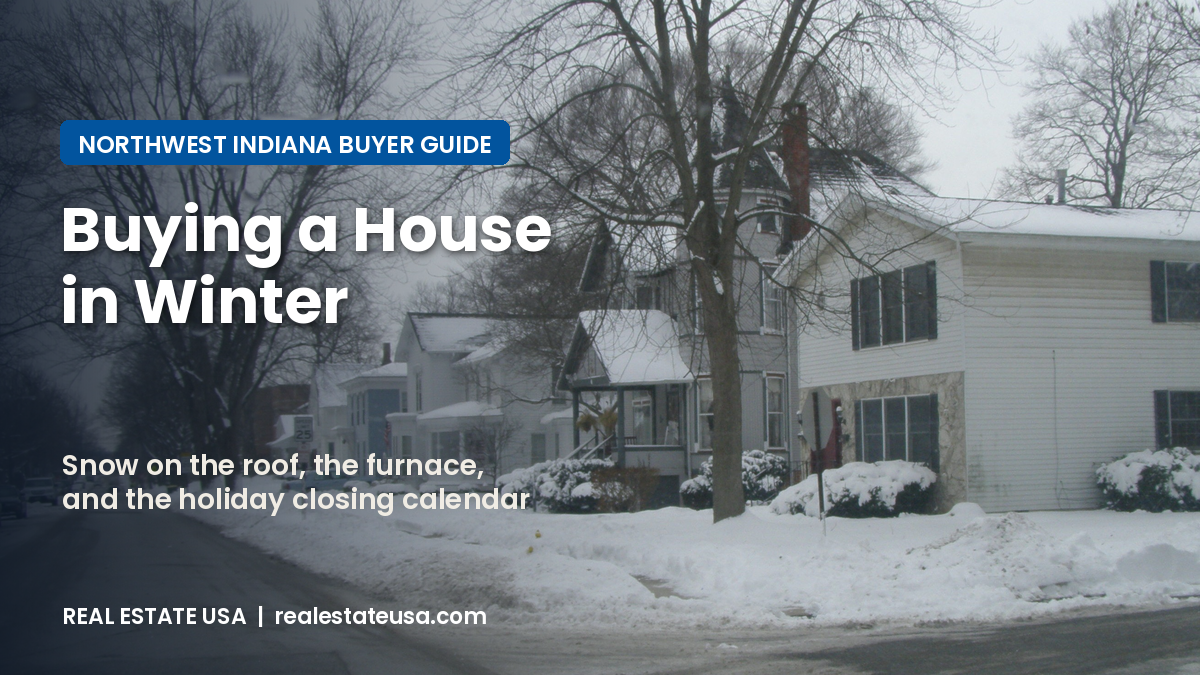
Photo by Chris Light of houses on a snowy street in Valparaiso, Indiana, January 2011, CC BY-SA 4.0, via Wikimedia Commons. Cropped, text added. Shown for illustration only. It is not a Realest listing.

Inspection rules and loan rules can change. This is general information, not legal or tax advice. Check with your inspector, your lender, or an attorney. The Valparaiso buyers are an example, not real clients.
Sources
- Indiana Code 25-20.2-2-7, home inspection report
- 878 IAC 1-2-1, Indiana minimum standards for home inspections
- InterNACHI Home Inspection Standards of Practice
- Consumer Financial Protection Bureau (CFPB): What is a Closing Disclosure?
- CFPB: Regulation Z, 12 CFR 1026.2, business day definition
- CFPB: Regulation Z, 12 CFR 1026.19, Closing Disclosure timing and receipt
- Office of Personnel Management (OPM): Federal holidays for 2026 and 2027
Ask Realest
Got a short question about a winter showing or inspection?
Ask Realest answers short buyer and seller questions in plain English.
When you’re ready to talk it through, contact us or call Sash at (219) 808-1520.
FAQ
Can you get a home inspection in winter in Indiana?
Yes. Licensed home inspectors in Indiana work all year. Indiana law says the report has to list any system the state standards cover that was not inspected, and the reason. If snow or cold kept the inspector from checking something, it should be written down.
Will the inspector test the air conditioning in winter?
Maybe not. The International Association of Certified Home Inspectors (InterNACHI) says its inspectors are not required to run cooling equipment when it is below 65 degrees Fahrenheit outside. Ask the seller for the air conditioner’s service records.
What happens if snow covers the roof during the inspection?
Indiana’s inspection standards say the inspector must report the methods used to inspect the roof. If snow hid the covering, the report should say so. Ask the seller for the roof’s age and any repair receipts, and look again at the final walkthrough if the snow has melted.
Do holidays change when I get my Closing Disclosure?
They can. Your lender has to get you the Closing Disclosure at least three business days before closing. For that rule, every day counts except Sundays and federal holidays. This season that leaves out Veterans Day on November 11, Thanksgiving on November 26, Christmas on December 25, and New Year’s Day on January 1, 2027.
How do I talk to Realest about buying a home this winter?
Call Sash at (219) 808-1520 or send us a note through our contact page. We can look at listings with you and set an inspection and closing calendar that works around the holidays.