
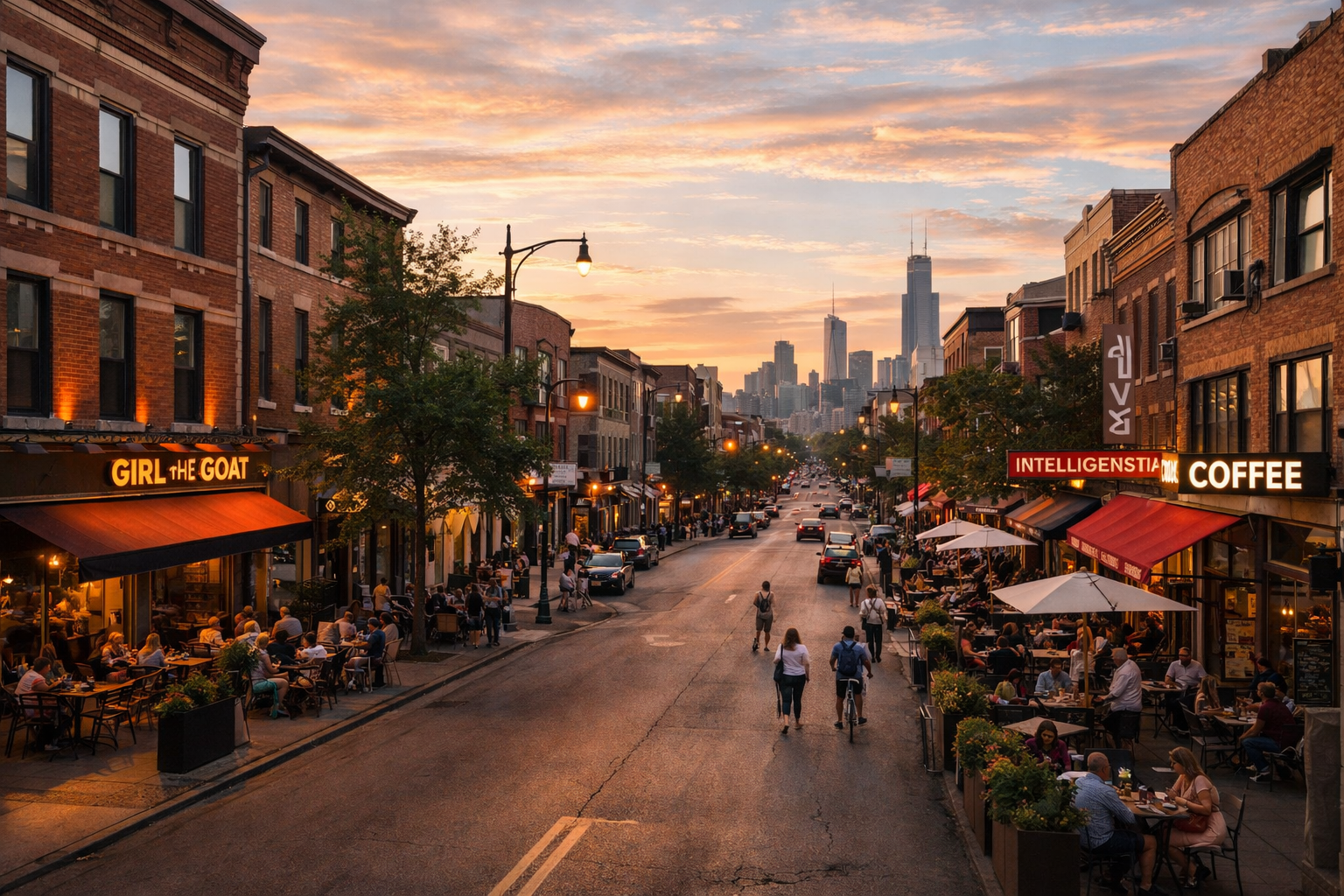
Best Chicago Neighborhoods for Food & Coffee Lovers (And Why People Choose to Live There)
When people search for the best restaurants or coffee shops in Chicago, they are often searching for more than a meal.
Food and coffee culture reveal how a neighborhood actually lives. They signal walkability, community energy, daily routines, and social connection. Over time, these lifestyle cues quietly influence where people decide to live.
This guide explores Chicago neighborhoods where food and coffee culture shape daily life and explains why those same neighborhoods attract residents year after year.
Why Food and Coffee Matter When Choosing Where to Live
Restaurants and coffee shops are not just destinations. They are indicators.
Neighborhoods with strong food and coffee scenes often share common traits:
- Walkable streets
- Active sidewalks and storefronts
- Strong local identity
- Consistent foot traffic
These characteristics tend to align with housing demand. Buyers and renters gravitate toward areas where daily life feels convenient and social.
In Chicago, this connection between lifestyle and housing is especially strong.
West Loop: Chicago’s Dining Destination
The West Loop has evolved from an industrial district into one of Chicago’s most sought-after neighborhoods, largely driven by its food scene.
Once known for warehouses, the area now attracts residents who value proximity to top-tier dining and an energetic urban environment.
Notable Restaurants in the West Loop
These restaurants helped transform the neighborhood into a culinary destination, attracting visitors and long-term residents alike.
Coffee Culture in the West Loop
West Loop coffee shops often double as workspaces and meeting spots, reinforcing the neighborhood’s fast-paced but social energy.
Residents tend to value walkability, proximity to downtown, and a vibrant street presence.
Logan Square: Coffee Culture Meets Creative Community
Logan Square has long been associated with creativity, community involvement, and a strong local identity.
The neighborhood’s coffee culture plays a central role in how residents interact with their surroundings.
Popular Coffee Shops in Logan Square
These cafes are gathering spaces for freelancers, families, and creatives who value connection as much as caffeine.
Local Dining Highlights
Logan Square’s dining scene reflects its residents: thoughtful, diverse, and community-oriented.
Housing interest here often comes from buyers who prioritize neighborhood character over flash.
Part 1 ends here. Part 2 continues with Wicker Park, Lincoln Park, and Lakeview.
Wicker Park: Where Dining, Nightlife, and Neighborhood Energy Intersect
Wicker Park has long been one of Chicago’s most recognizable lifestyle neighborhoods. Known for its creative roots, nightlife, and dense commercial corridors, it continues to attract residents who want energy without losing a neighborhood feel.
The food and coffee scene in Wicker Park reflects this balance. Cafés and restaurants are woven directly into residential streets, making everyday routines walkable and social.
Popular Coffee Shops in Wicker Park
These spots often serve as informal meeting places for residents, remote workers, and creatives who value atmosphere as much as quality.
Restaurants That Define the Neighborhood
Wicker Park appeals to buyers and renters who want strong nightlife options paired with access to public transit and daily conveniences.
Lincoln Park: Established Living with Culinary Depth
Lincoln Park offers a different rhythm. It is one of Chicago’s most established neighborhoods, blending residential stability with an extensive dining scene.
Residents here often prioritize access to parks, schools, and walkable commercial streets.
Lincoln Park Coffee Favorites
Coffee shops in Lincoln Park often feel like extensions of the neighborhood itself, frequented by families, professionals, and long-term residents.
Restaurants That Anchor Lincoln Park
Lincoln Park attracts buyers who want lifestyle balance, not extremes.
Lakeview: Variety, Walkability, and Everyday Convenience
Lakeview remains one of Chicago’s most diverse neighborhoods, both in housing types and lifestyle options.
The area’s strength lies in variety. Residents can walk to casual cafés, upscale dining, grocery stores, and entertainment venues without leaving the neighborhood.
Lakeview Coffee Shops Residents Love
Dining Spots That Shape the Neighborhood
Lakeview appeals to residents who want flexibility, transit access, and strong neighborhood infrastructure.
Part 2 ends here. Part 3 will tie lifestyle searches to housing decisions, connect to Realest.com, and include FAQ + schema.
Why Food and Coffee Searches Often Turn Into Housing Decisions
Many people don’t realize they are researching neighborhoods when they search for restaurants or coffee shops.
Search phrases like “best coffee shops in Logan Square” or “restaurants in West Loop” are often the first step in a longer decision-making process. People are trying to understand where they might enjoy spending their time, building routines, and connecting with others.
Over time, these lifestyle searches evolve into deeper questions:
- Could I see myself living here?
- What does daily life feel like in this neighborhood?
- Is this area walkable and social?
- Does this fit my stage of life?
Food and coffee culture act as visible signals of neighborhood health, activity, and identity. Areas with thriving local businesses often indicate strong resident engagement and long-term appeal.
How Chicago Lifestyle Searches Compare to Nearby Midwest Markets
Chicago offers unmatched density, culture, and dining variety. For many residents, that is exactly why they choose to live there.
At the same time, lifestyle-driven searches sometimes lead buyers to compare Chicago neighborhoods with nearby Midwest options that offer different tradeoffs.
Buyers often begin asking questions such as:
- Can I get similar community energy with more space?
- How do housing costs compare long-term?
- What does everyday convenience look like outside the city?
This is where Chicago lifestyle exploration quietly intersects with broader regional housing decisions.
Many buyers researching Chicago neighborhoods eventually explore Northwest Indiana communities that offer walkable downtowns, strong local businesses, and access to dining and coffee culture, while providing different housing options.
For readers curious how these comparisons play out, local market perspectives can be found through regional resources like Realest.com’s housing and community guides, which focus on Northwest Indiana lifestyle and housing trends.
What Makes Lifestyle-Centered Neighborhoods Hold Value
Neighborhoods anchored by food, coffee, and local businesses tend to show resilience over time.
This does not mean prices never fluctuate. It means demand remains more consistent because people are choosing the area for how it feels, not just what it costs.
Common traits of lifestyle-centered neighborhoods include:
- Independent restaurants and cafés
- Walkable commercial corridors
- Regular foot traffic
- Community events and gathering spaces
These elements create emotional attachment. That attachment often translates into longer residency and sustained interest.
How Buyers Can Use Lifestyle Research Without Overcommitting
Not every lifestyle search needs to lead directly to a housing decision.
In fact, the most confident buyers often spend months learning before they ever tour a home.
Using restaurant and coffee research as a lens helps buyers:
- Understand neighborhood personality
- Compare daily routines across areas
- Identify where they feel most comfortable
- Narrow housing searches naturally
This approach reduces pressure and replaces urgency with clarity.
Frequently Asked Questions About Chicago Lifestyle Neighborhoods
Are food-focused neighborhoods more expensive?
Often, but not always. Popular dining areas may command higher prices, but housing options vary widely by block and building type.
Do coffee shops really indicate neighborhood demand?
Yes. Consistent foot traffic and locally supported cafés often reflect stable residential interest.
Is it better to rent or buy in these neighborhoods?
It depends on lifestyle, budget, and how long you plan to stay. Many residents rent first to learn the area.
Why do people compare Chicago neighborhoods to nearby regions?
As priorities change, buyers often compare lifestyle benefits alongside housing affordability and space.
Final Thoughts
People don’t choose neighborhoods based on numbers alone. They choose them based on how life feels there.
Food and coffee culture offer a window into that feeling. They show how people gather, connect, and move through their day.
Understanding these patterns helps buyers, renters, and explorers make more informed decisions, whether they stay in Chicago or begin comparing other Midwest options.
Clarity comes from observing how people actually live, not just where they eat.