
A pre-listing inspection is a home inspection you order before your house goes on the market. In Northwest Indiana it is optional, but anything it turns up that the state disclosure form covers is something you now know and should plan to disclose. It pays off when you want to fix, price, or credit problems on your own schedule instead of during a buyer’s inspection period.
Thinking about listing this winter? Call Sash at (219) 808-1520.
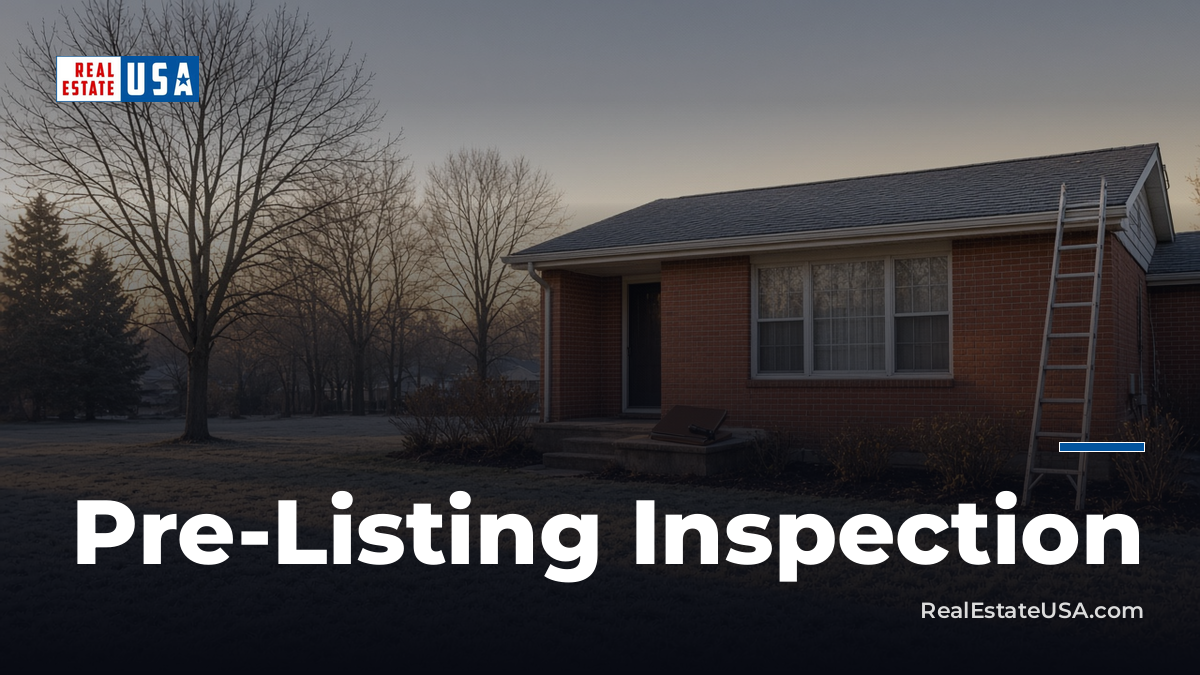
It is seven in the morning in early November, and the lawn in front of a brick ranch is white with frost.
An aluminum ladder leans against the front of the house. On the step there is a flashlight and a clipboard with a blank page. The sun is just over the bare oaks at the end of the street, and the shadows are long and blue.
The owners have lived here for twenty years. They want to list in January, once the holidays are over and the packing starts. They asked an inspector to come out first, before any buyer does.
Their question is the one we hear every fall. Is it smart to find the problems yourself, or are you just handing a buyer a list?
Want the quick version? Sash walks through a pre-listing inspection in this short video.
What a pre-listing inspection is
It is the same kind of inspection a buyer orders, only you hire the inspector and you get the report. Indiana licenses home inspectors through the Home Inspectors Licensing Board at the Indiana Professional Licensing Agency, and you can check any inspector on the state’s free Search and Verify tool.
Indiana does not require it. What the state does require, for sales of one to four unit homes with a few exceptions, is the Seller’s Residential Real Estate Sales Disclosure. You complete and sign it, and the buyer gets it before an offer is accepted. Our guide to what goes on Indiana’s seller disclosure form walks through it line by line.
What you learn, you disclose
The disclosure form asks about the known condition of the foundation, the mechanical systems, the roof, the structure, and the water and sewer systems. Its instructions tell sellers to report all known conditions, regardless of how they know about them or when they learned. If something changes before closing, you tell the buyer in writing.
So a pre-listing report is not a private document you can file away. If it shows a roof leak or a cracked foundation, that is now something you know. The Indiana Court of Appeals held, in Hizer v. Holt, that a seller can be liable for misstatements on the form when the seller actually knew about the defect.
Indiana Code 32-21-5 defines a defect as a condition that would significantly hurt the value, the health or safety of future occupants, or the expected life of the home if it is not fixed. A dripping faucet is not that. A failing sewer line can be.
We are not lawyers. If you are not sure how to describe something on the form, ask a real estate attorney before you sign it.
What you gain and what you take on
| What you gain | What you take on |
|---|---|
| You find problems on your schedule | You learn about defects you then have to disclose |
| You can fix, price, or credit before a buyer sees it | You pay for the inspection up front |
| Fewer surprises during the buyer’s inspection period | The buyer will still order their own inspection |
| A clear story to tell buyers about the house | Some findings are minor and still worry a buyer |
Our summary, not legal advice. The buyer’s rights come from the purchase agreement and the disclosure law.
When it pays off
We think about a pre-listing inspection for three kinds of houses.
An older home, where the furnace, roof, or sewer line could be near the end. A house with a well or a septic system. And a house the owners have not been inside every corner of in years, like a rental, a parent’s home, or the place you moved out of last spring. For those, a few checks can save a deal later. Radon is its own test, and our radon guide covers it.
Listing in winter? Our guide to selling a house in winter goes deeper. Walking in with fewer unknowns makes the buyer’s inspection contingency a shorter conversation.
When you can skip it
A newer house in good shape, with records for the roof, furnace, and water heater, may not need one. Neither does a house you plan to sell as is and price that way. In those cases your agent’s walkthrough and a complete, careful disclosure form may be enough.
What to do with each finding
Fix, disclose, or price it in
| Kind of finding | Example | What we would do |
|---|---|---|
| Small and cheap to fix | Loose railing, dripping faucet, missing GFCI cover | Fix it before photos |
| Covered by the disclosure form | Roof leak, foundation crack, sewer or septic issue | Repair with receipts, or disclose and price it in |
| Big ticket and hard to fix fast | Furnace near the end of its life, old roof | Get a written quote and talk about a credit |
| Not a defect, just age | Older windows, dated water heater that works | Note it and move on |
Examples only. Every house and every buyer is different.
Whatever you decide, keep the receipts. A repair with a paid invoice reads much better to a buyer than a line on a form. If you would rather give a credit than fix something, our guide to seller concessions explains how that shows up in the contract, and our seller net sheet shows what it does to your bottom line.
For the rest of the prep list, from paint to photos, see what to do before you list. When you are ready to talk price, start with how to price a home for sale.
Back on the frosty lawn
By nine the frost is gone and the ladder is back on the truck. The report comes two days later. The roof has a few good winters left. The sump pump does not.
The owners replace the pump in December, staple the receipt to the report, and list on a cold Tuesday in January. The buyer’s inspector finds the new pump and moves on.
Work with Realest
Talk to a Realest agent
Thinking about listing after the holidays? Call Sash and we will walk the house with you before anyone else does.
Call Sash at (219) 808-1520
Ask for your home value
Buying too? Search homes for sale or call Sash at (219) 808-1520.
Would you rather write? Send us a note.
Want us to look at your house before you decide on an inspection? Tell us about the house and we will set up a time.
Sash Joveski and Pamela “Pam” Joveski are founding members of Realest. Pam’s number is (219) 801-0432. Realest is licensed in Indiana and Illinois and is at 112 S. Main St., Suite B, Crown Point, serving all of Northwest Indiana and Chicagoland.
The photo was generated for this guide on November 11, 2026, then cropped with text added. Shown for illustration only. It is not a photo of any real home.
This guide is general information, not legal advice. The ranch house and its owners are an example, not real clients.
Sources
- Indiana Code 32-21-5, residential real estate sales disclosure
- State of Indiana: Seller’s Residential Real Estate Sales Disclosure form
- Indiana Court of Appeals case clip: Hizer v. Holt (2010)
- Indiana Professional Licensing Agency: Home Inspectors
- Indiana PLA: Free Search and Verify
Ask Realest
Got a quick question about selling, a disclosure item, or what an inspector found?
Ask Realest answers short buyer and seller questions in plain English, any time of day.
When you are ready to talk it through, contact us or call Sash at (219) 808-1520.
FAQ
What is a pre-listing inspection?
It is a home inspection the seller orders before the house goes on the market. A licensed home inspector looks at the roof, structure, foundation, mechanical systems, plumbing, and electrical, then writes a report for you instead of for a buyer.
Do I have to disclose what a pre-listing inspection finds in Indiana?
If it finds a defect in an area the form covers, plan on it. The Indiana seller disclosure form tells sellers to report all known conditions, regardless of how they learned about them. A report you have read is something you know. Ask a real estate attorney if you are unsure how to word an item.
Is a pre-listing inspection required in Indiana?
No. Indiana law requires sellers of one to four unit homes, with some exceptions, to complete and sign the seller disclosure form before an offer is accepted, but it does not require a seller inspection. It is your choice.
Will the buyer still get their own inspection?
Plan on it. The disclosure form encourages buyers to get their own professional inspections, and a buyer’s inspection period is set in the purchase agreement. Your report helps you get ahead of surprises, but it does not replace theirs.
How do I check that a home inspector is licensed in Indiana?
Indiana licenses home inspectors through the Home Inspectors Licensing Board at the Professional Licensing Agency. Look the inspector up by name on the state’s free Search and Verify tool. Call Sash at (219) 808-1520 if you want help deciding whether an inspection makes sense for your house.