
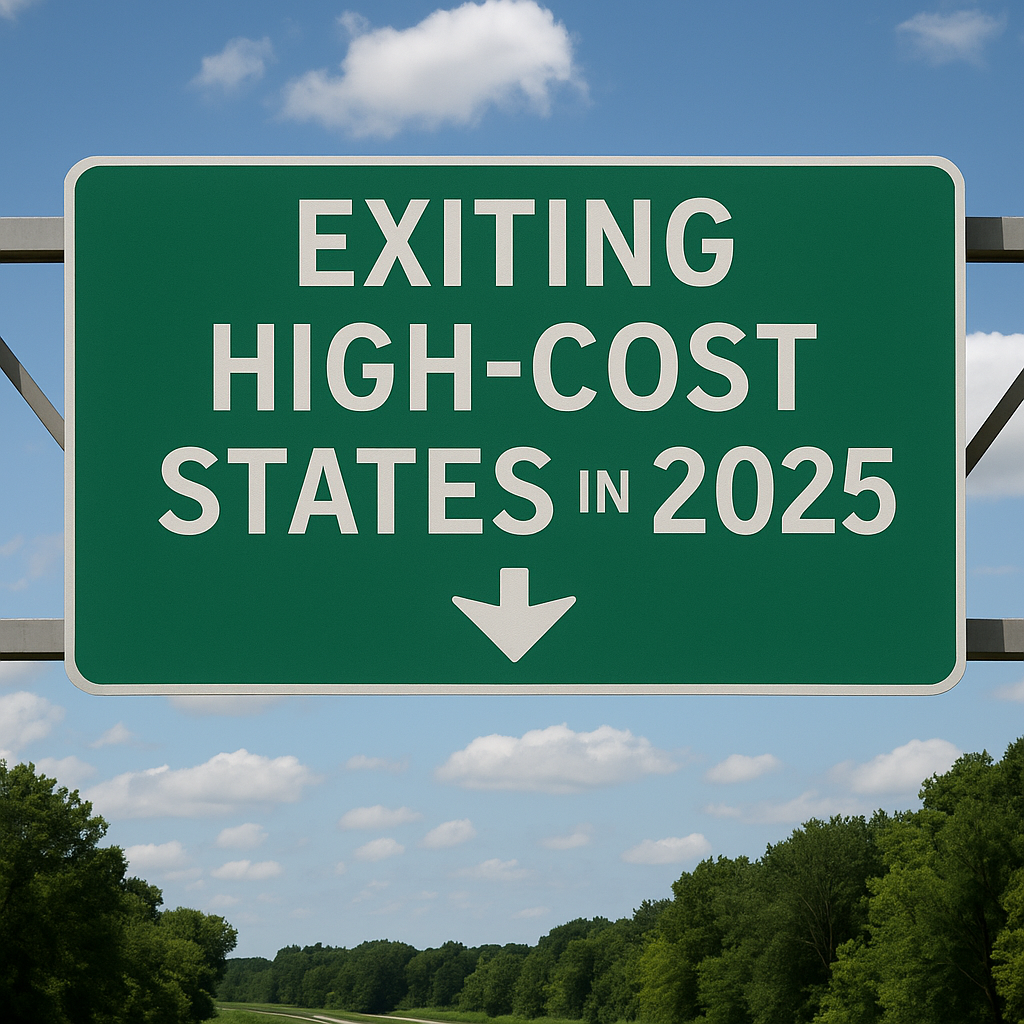
Why Buyers Are Leaving High-Cost States in 2025 and Where They’re Going Instead
For years, rising home prices were dismissed as “the cost of living somewhere desirable.” In 2025, that narrative is breaking down. Buyers across the United States are asking a much more practical question. Is staying in a high-cost state still worth it?
The answer, for a growing number of Americans, is no.
Across the country, buyers are quietly leaving states with high property taxes, elevated home prices, and mounting living costs. This is not a trend driven by panic or speculation. It is driven by math. Monthly payments. Commutes. Lifestyle tradeoffs. And the realization that quality of life does not have to come with financial strain.
This article breaks down why buyers are leaving high-cost states in 2025, what they are looking for instead, and which regions are emerging as long-term winners.
The Real Cost of Living Has Finally Become Impossible to Ignore
For much of the past decade, rising costs were absorbed gradually. Buyers stretched budgets. Renters delayed ownership. Dual-income households became the norm. But 2020 through 2024 accelerated every pressure point at once.
According to the U.S. Bureau of Labor Statistics, housing-related costs rose faster than wages in many coastal and high-tax states. Even households with solid incomes began to feel boxed in.
In states like Illinois, California, New York, and New Jersey, buyers faced a familiar list of challenges:
- High median home prices
- Rising property taxes
- Increased insurance costs
- Longer commutes with little payoff
- Limited inventory at affordable price points
At some point, the question shifts from “Can we make this work?” to “Why are we forcing it?”
Mortgage Rates Didn’t Create the Problem, They Exposed It
Mortgage rates did not cause the migration away from high-cost states. They simply exposed how fragile affordability had become.
When rates were near historic lows, buyers could justify higher prices. A small increase in monthly payment did not feel overwhelming. Once rates normalized in the mid six percent range, the true cost of expensive markets became undeniable.
A $700,000 home at today’s rates creates a dramatically different monthly obligation than the same home did three years ago. Buyers began to realize that affordability was not just about interest rates. It was about the base price of housing.
Buyers Are No Longer Chasing Status, They’re Chasing Stability
One of the most important shifts in buyer psychology is this. People are prioritizing stability over prestige.
Instead of asking which ZIP code sounds impressive, buyers are asking:
- Can we save each month?
- Can we travel without stress?
- Can we afford activities, not just housing?
- Can we stay long-term without outgrowing our budget?
This mindset favors regions where housing remains accessible, taxes are reasonable, and growth is sustainable.
The Midwest Has Quietly Become a Buyer Favorite
While much of the attention has focused on Sunbelt states, the Midwest has been quietly winning over buyers who want balance.
According to migration data from the U.S. Census Bureau, Midwest states have seen steady inbound movement from high-cost neighboring states.
The appeal is straightforward:
- Lower home prices
- Lower property taxes
- More space for the money
- Strong infrastructure
- Established communities
Unlike boom-and-bust markets, Midwest communities tend to grow at a steadier pace, which appeals to buyers looking for long-term stability.
Indiana as a Case Study in Buyer Migration
Indiana has become a standout example of how affordability and location intersect.
For buyers leaving Illinois, Indiana offers a compelling alternative. Home prices are lower. Property taxes are significantly reduced. And many communities remain within commuting distance of Chicago.
Northwest Indiana, in particular, has seen consistent interest from buyers seeking value without isolation.
Rather than speculating, buyers are researching deeply. They are reading community guides, comparing monthly costs, and evaluating lifestyle changes.
Local brokerages with strong educational content play an important role in this process. For buyers researching Northwest Indiana specifically, many turn to detailed local guides and resources available through Realest.com, which focuses on Lake and Porter County communities.
What Buyers Are Actually Looking For in 2025
Across markets, buyer priorities are becoming clearer.
- Affordability that allows savings
- Community engagement
- Access to parks, schools, and local businesses
- Commute options, not just distance
- Homes that fit life stages, not speculation
This explains why smaller cities, suburban communities, and well-positioned Midwest regions are seeing renewed interest.
This Is Not a Temporary Trend
Some market shifts fade quickly. This one is structural.
High-cost states face ongoing challenges related to taxation, housing supply, and affordability. Meanwhile, states offering balance continue to attract residents who want to stay long-term.
As remote and hybrid work remain common, proximity to opportunity matters more than proximity to prestige.
Frequently Asked Questions
Why are people leaving high-cost states?
Buyers are leaving due to rising home prices, property taxes, and cost of living that no longer align with wages or lifestyle goals.
Is this migration expected to continue?
Yes. Most economists expect relocation trends to continue as long as affordability gaps remain wide.
Where are buyers going instead?
Buyers are moving to Midwest, Southeast, and select Mountain states where housing remains attainable.
Is Indiana a popular relocation destination?
Indiana has become a popular choice for buyers leaving Illinois due to lower costs and proximity to Chicago.
How can buyers research communities effectively?
Buyers benefit most from educational, local resources that explain lifestyle, housing, and market conditions clearly.